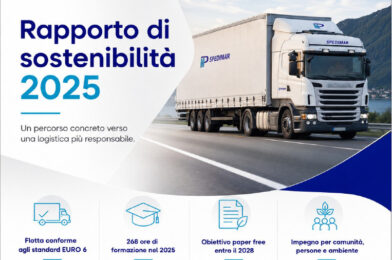
Sustainability Report 2025

Sustainability is not only about reducing environmental impact. It also means valuing people, strengthening ties with the local area, improving business processes and building transparent relationships with customers, partners and suppliers.
With the publication of its Sustainability Report 2025, Spedimar describes its journey towards an increasingly responsible growth model, one that integrates economic results, environmental care and social value.
The report was prepared according to the model developed by SUPSI and promoted by the Chamber of Commerce, Industry, Crafts and Services of the Canton of Ticino, with the support of the Economic Division of the DFE.

A comprehensive view of sustainability in logistics
For Spedimar, talking about sustainability in logistics means considering four fundamental dimensions together:
protecting the environment;
the well-being and development of our staff;
responsibility towards the community;
transparency and quality in business management.
This approach stems from the conviction that a sustainable business must be able to create long-term value, not only for the company but also for the people and stakeholders it deals with every day.
The aim is therefore to go beyond the individual shipment, developing logistics that are more efficient, innovative and responsible.

People, training and well-being at work
People are one of the central elements of Spedimar’s sustainability journey. In 2025 the company had 29 employees, 27 of them on permanent contracts and 2 apprentices. Particular attention is paid to job stability, safety, organisational flexibility and work-life balance.
During the year, 268 hours of training were delivered, with a total investment of more than CHF 10,000. The courses covered a range of areas, including safety, languages, internal procedures, legal matters and shipment management.
Initiatives for employees also include a company welfare scheme, the option of remote working for compatible roles, flexible management of overtime and a system of bonuses and recognition linked to results and performance.
Investing in skills means improving the quality of service while at the same time offering people real opportunities for professional growth.


More environmentally conscious logistics
The transport and logistics sector inevitably has environmental impacts linked to energy consumption, fuel use and emissions.
That is why Spedimar has embarked on a process of monitoring and improving its environmental performance, focusing on transport efficiency, managing consumption and reducing waste.
In 2025 the transition to a vehicle fleet fully compliant with EURO 6 standards, or equivalent environmental categories, was completed. Renewing the fleet improves operational efficiency and reduces the pollutant emissions generated by transport activities.
The company also promotes:
separate waste collection;
the use of recycled paper;
monitoring of energy consumption;
analysis of the environmental impact of certain routes;
internal awareness-raising on sustainability issues.
The report also includes an initial estimate of the environmental footprint of six representative routes, totalling an estimated 271 shipments a year. This analysis provides a useful basis for progressively improving data quality and identifying new opportunities to optimise transport.


Digitalisation and the paper-free goal
One of the most important objectives of Spedimar’s environmental journey concerns the digitalisation of processes.
The company aims to eliminate the use of paper completely by 2028.
Going paper-free is not only about reducing resource consumption. Digitalisation also speeds up operational workflows, improves information management, reduces errors and makes business processes more efficient and traceable. Technology and sustainability thus become complementary elements of an innovation journey that involves the entire organisation.


Social responsibility and ties with the local area
Spedimar’s sustainability also includes a strong commitment to the local community.
During 2025 the company supported social, sporting and educational initiatives, working with associations, schools and organisations in the region.
Activities included support for the Associazione Fibrosi Cistica Ticinese (Ticino Cystic Fibrosis Association), sponsorship of the SC Balerna women’s team and collaboration with Spedlogswiss on apprentice training.
Spedimar also organises orientation days and open days for lower secondary school students and for the Centro Professionale Commerciale in Chiasso, giving young people the chance to get a closer look at the world of logistics, freight forwarding and customs.
These initiatives confirm the company’s commitment to contributing to the development of the region and creating real opportunities for the next generation.


Governance, quality and stakeholder relations
Sustainable growth also requires governance that is solid, transparent and focused on continuous improvement.
The values underpinning Spedimar’s business are honesty, organisation, ambition, passion and method. These principles guide relationships with employees, customers, partners and suppliers.
The company also obtained AEO certification in 2023 and ISO 9001 certification in 2025.
ISO 9001 certification represents a further step towards standardising processes, measuring performance and continuously improving the quality of service.
Supplier selection is also managed using structured criteria that take into account not only economic and technical aspects, but also reliability, compliance, ethics and sustainability.


Goals for the coming years
The Sustainability Report 2025 is not just a snapshot of the activities carried out, but also a starting point for future goals.
The main targets identified by Spedimar include:
greater involvement of stakeholders in decision-making processes by 2026;
development of a structured emissions reduction plan for 2026-2027;
obtaining IATA certification by 2027;
supporting an apprentice through to the completion of their training by 2027;
complete elimination of paper use by 2028.
These goals demonstrate the company’s determination to integrate sustainability, innovation and business growth ever more closely.

A concrete commitment to the future of logistics
For Spedimar, the Sustainability Report 2025 represents a commitment to greater transparency and a path of continuous improvement.
Measuring activities, communicating results and setting concrete goals means taking responsibility for our choices and preparing for the future challenges of the logistics sector.
For Spedimar, sustainability means continuing to move goods and connect markets while helping people, the local area and the quality of the services we offer to grow at the same time.
Not just a supplier, but your partner.

FAQ
What is Spedimar’s Sustainability Report?
It is the document in which Spedimar presents its activities, results and goals in the environmental, social, economic and governance spheres.
What environmental initiatives has Spedimar carried out?
The main initiatives include renewing the fleet to EURO 6 standards, monitoring consumption, separate waste collection, using recycled paper and launching analyses of the environmental impact of transport.
What are Spedimar’s future goals?
The main goals include reducing emissions, further digitalisation of processes, greater stakeholder involvement and achieving the paper-free goal by 2028.
Groupage or Full Truckload? How to Choose the Right Transport

When you need to organise road freight, one of the first decisions concerns the shipping mode: is it better to choose groupage transport or to book a full truckload?

The answer depends mainly on the volume of goods, delivery times, the available budget and the characteristics of the load.

Choosing the wrong solution can mean paying more than necessary, extending delivery times or increasing the number of times the goods are handled.

In this guide we look at the differences between groupage, collettame (the Italian term), LTL transport and FTL full loads, explaining when each solution makes sense and why customs handling is particularly important for shipments between Italy and Switzerland.

What is groupage transport?

Groupage, known in Italian as collettame and also called LTL – Less Than Truckload transport, is a mode of transport in which goods from several customers are consolidated and loaded onto the same vehicle.

Each customer pays only for the space actually taken up by their shipment, rather than bearing the cost of an entire lorry.

The price can be calculated on the basis of several parameters, including:

  • number of packages;
  • number and type of pallets;
  • actual weight;
  • volumetric weight;
  • loading metres occupied;
  • collection and delivery locations.

Groupage is particularly suitable for companies that need to ship small quantities of goods, such as one or more pallets, without having enough volume to fill a whole vehicle.

How does a groupage shipment work?

The goods are usually collected from the sender and transferred to a logistics hub, where they are consolidated with other shipments bound for the same geographical area.

The goods are then split up and forwarded to their respective destinations.

This set-up makes it possible to optimise the space available on vehicles and to reduce the transport cost for each individual customer.

However, the presence of several sorting stages can mean:

  • slightly longer delivery times;
  • more handling;
  • the need for suitable packaging;
  • greater attention to transport and customs documentation.

What is an FTL full load?

A full load, also known as FTL – Full Truckload transport, means the vehicle is used exclusively by a single customer.

The goods are loaded at the point of departure and transported directly to their destination, without being consolidated with shipments from other senders.

A full load is the right choice when:

  • the goods fill all or almost all of the lorry;
  • delivery is urgent;
  • the load is delicate or of high value;
  • handling needs to be kept to a minimum;
  • the customer requires greater control over the route;
  • precise delivery windows are required.

Compared with groupage, FTL transport generally offers faster transit times and greater predictability, as the vehicle does not have to carry out intermediate consolidation and sorting operations.

What is a part load?

Between groupage and full load there is also an intermediate solution: the part load, often referred to as PTL – Partial Truckload.

This mode suits shipments that take up a significant portion of the vehicle, but not enough to justify booking an entire lorry from a cost point of view.

A part load can be a good compromise between:

  • cost;
  • transit time;
  • space occupied;
  • number of handling operations.

Whether it is worthwhile must be assessed case by case, comparing the cost of groupage with that of a dedicated vehicle.

The difference between groupage and full load

The main difference lies in how the vehicle is used.

With groupage the space is shared with other customers, whereas with a full load the lorry is dedicated entirely to a single shipment.

FeatureGroupage / LTLFull load / FTL
Use of the vehicleShared with other shipmentsExclusive
Ideal forA few packages or palletsLarge volumes
CostBased on the space occupiedBased on the whole vehicle
Delivery timesGenerally longerGenerally faster
HandlingMoreLess
RouteMay involve intermediate hubsDirect
FlexibilityHigh for small quantitiesHigh for urgent and large loads
Handling riskHigherLower

When is groupage the right choice?

Groupage is generally the most cost-effective solution when the shipment consists of:

  • a limited number of packages;
  • one or a few pallets;
  • goods that are not particularly urgent;
  • volumes too small to fill a lorry;
  • regular deliveries of small quantities.

The main economic advantage is that you pay only for the space you use.

For example, shipping a single pallet on a dedicated lorry would not normally be cost-effective. By including it in a groupage shipment, the cost of the vehicle is instead shared among several customers.

Groupage is therefore particularly suitable for companies that ship regularly but in modest quantities.

When is a full load the right choice?

A full load is generally preferable when:

  • the quantity of goods fills or almost fills the vehicle;
  • the groupage cost per pallet comes close to the cost of a full lorry;
  • delivery must take place quickly;
  • the goods are fragile, sensitive or of high value;
  • precise delivery dates and times are required;
  • you want to avoid passing through logistics hubs;
  • the load cannot be transported together with other goods.

As volume increases, a full load can become more cost-efficient than groupage.

In these cases you should not compare only the total price but, above all, the cost per unit transported, such as the cost per pallet, per tonne or per loading metre.

Four factors to assess before you choose

1. Volume and weight of the goods

Volume is often the first factor to consider.

A few packages or pallets generally make groupage the cost-effective option. When the goods take up a substantial part of the vehicle, however, it is worth comparing the cost of groupage with that of a full load.

In addition to actual weight, volumetric weight must also be considered. Goods that are light but very bulky can take up a significant amount of space on the lorry.

2. Delivery times

A full load normally offers faster transit times, because the goods are transported directly from the sender to the consignee.

Groupage, on the other hand, involves consolidation, sorting and distribution operations.

When delivery is tied to a fixed deadline, dedicated transport can offer greater certainty.

3. Fragility and value of the load

Every additional handling operation increases the risk of impacts, errors or damage.

For goods that are fragile, delicate, oversized or of high value, a full load can be the more prudent solution because it reduces the number of transfers.

Groupage nonetheless remains a safe mode of transport, provided that the goods are properly packed and entrusted to a well-organised logistics operator.

4. Available budget

For small quantities, groupage is generally cheaper, because the customer pays only for the space used.

As volumes grow, however, a full load can become more cost-effective. Filling a lorry allows the transport cost to be spread over a larger number of pallets or packages.

Italy-Switzerland groupage: why customs is essential

For shipments between Italy and Switzerland, the choice between groupage and full load cannot be assessed by looking at transport alone.

Switzerland is not part of the European Union, so every commercial shipment must be accompanied by the documentation required for import, export or transit operations.

With a full load, customs handling generally involves a limited number of parties and documents.

With groupage transport, by contrast, the same vehicle may carry shipments belonging to different senders and consignees, each with:

  • its own commercial invoices;
  • different customs classifications;
  • different values and origins;
  • export and import documents;
  • any permits or certifications required.

A missing document, an incorrect tariff classification or incomplete information can slow down operations and, in some cases, affect the entire consignment.

That is why it is important to work with a freight forwarder able to coordinate both transport and customs clearance.

The advantages of a single partner for transport and customs

Separating transport management from customs handling can lead to delays, misunderstandings and information being passed back and forth between different providers.

Working with a single point of contact, on the other hand, allows you to:

  • check documents in advance;
  • coordinate collection with the opening of the customs entry;
  • reduce the risk of errors;
  • deal with any irregularities more quickly;
  • monitor the shipment at every stage;
  • simplify communication between sender and consignee.

For shipments crossing the border between Italy and Switzerland, coordination between logistics and customs is often decisive in meeting delivery deadlines.

Spedimar’s location in Chiasso allows us to operate directly at one of the main trade gateways between the two countries, offering integrated support for transport, international shipping and customs formalities.

How much does groupage transport cost?

The cost of a groupage shipment varies according to several factors:

  • number of pallets or packages;
  • dimensions of the goods;
  • actual and volumetric weight;
  • loading metres occupied;
  • distance between collection and delivery;
  • frequency of departures;
  • any dangerous goods;
  • need for a tail lift;
  • insurance required;
  • customs operations;
  • any waiting times.

It is therefore not possible to give a reliable price without knowing the characteristics of the shipment.

To obtain an accurate quote, it is important to provide weight, dimensions, addresses, type of goods and loading and unloading conditions right from the start.

How much does a full load cost?

The cost of a full load depends mainly on:

  • the route;
  • type of vehicle;
  • kilometres;
  • tolls;
  • vehicle availability;
  • loading and unloading times;
  • any stops;
  • type of goods;
  • customs formalities;
  • any urgent or dedicated deliveries.

Although the overall price of a full lorry is higher than that of a small groupage shipment, the unit cost can be lower when the vehicle is used efficiently.

What information do you need to request a quote?

To work out quickly whether groupage or a full load is the better option, some key information is needed:

  • place and country of departure;
  • place and country of destination;
  • number of packages or pallets;
  • dimensions;
  • gross weight;
  • type of goods;
  • commercial value;
  • collection date;
  • requested delivery date;
  • whether dangerous goods are included;
  • need for a tail lift;
  • availability of a forklift;
  • any customs requirements.

Providing complete information allows the freight forwarder to identify the most efficient solution and avoid subsequent price changes or operational delays.

How to prepare goods correctly for groupage

Because groupage can involve several handling operations, packaging plays a fundamental role.

We recommend that you:

  • use pallets that are undamaged and suitable for the weight;
  • secure the goods to the pallet;
  • use stretch film or strapping;
  • protect corners and protruding parts;
  • avoid unstable packages;
  • apply legible labels;
  • clearly mark any fragile goods;
  • check that the documents match the goods actually loaded.

Correct packaging protects the contents and makes handling and identification easier at logistics terminals.

Frequently asked questions about groupage and full loads

What is the difference between groupage and collettame?

There is no substantial difference. Groupage is the international term, while collettame is the Italian term used for the transport of small shipments consolidated on the same vehicle.

In English this mode is commonly referred to as LTL, or Less Than Truckload.

What is the difference between LTL and FTL?

LTL stands for Less Than Truckload and refers to a shipment that takes up only part of the lorry.

FTL stands for Full Truckload and refers to a vehicle used entirely by a single customer.

Can I ship a single pallet to Switzerland?

Yes. Shipping a single pallet is one of the most common cases in which groupage is cost-effective.

The cost is calculated on the basis of the space occupied, without having to book an entire lorry.

Is groupage less safe than a full load?

Groupage is not necessarily less safe, but it generally involves more handling.

Safety depends on the quality of the packaging, the organisation of the hubs and the reliability of the logistics operator.

Is a full load always faster?

Generally yes, because the vehicle travels directly from the loading point to the destination.

Transit times can nevertheless depend on distance, vehicle availability, delivery windows, traffic and customs operations.

Who handles customs clearance?

Customs clearance can be handled by a customs agent appointed by the sender or the consignee.

Entrusting both transport and customs to the same freight forwarder, however, allows operations to be coordinated better and reduces the risk of delays at the border.

Is it possible to combine groupage with urgent delivery?

Yes, on some routes groupage services are available with frequent departures or guaranteed transit times.

When the urgency is particularly high, however, it may be more cost-effective to choose a dedicated vehicle or an express service.

Groupage or full load: which should you choose?

There is no single best option. The right choice depends on the characteristics of each individual shipment.

Groupage is generally more suitable when:

  • volumes are modest;
  • the goods can be consolidated;
  • timing is relatively flexible;
  • you want to optimise costs.

A full load, on the other hand, is preferable when:

  • the volume is high;
  • delivery is urgent;
  • the goods are fragile or valuable;
  • you want to reduce handling;
  • you need greater control over timing.

For shipments between Italy and Switzerland, it is also essential to take customs handling into account. Good document planning and effective coordination between transport and customs clearance can make the difference between a smooth delivery and goods held at the border.

Request an assessment of your shipment

Not sure whether groupage, a part load or a full lorry is the most cost-effective option for your goods?

Spedimar analyses volume, weight, route, timing and customs requirements to identify the most efficient transport solution.

Contact us with the details of your shipment: we will help you choose the most suitable mode, coordinating transport and customs through a single point of contact.

Spedimar: not just a supplier, but your partner for transport, international shipping and customs operations.

Sea Freight Shipping: How FCL and LCL Work and Which to Choose

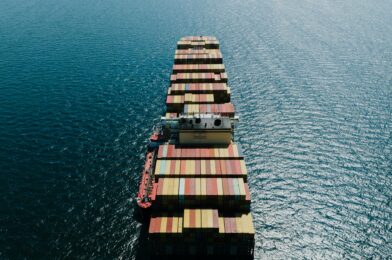
Sea freight carries over 80% of world merchandise trade and is the most widely used mode for imports from China, South-East Asia, the Americas and the Middle East. For companies in Switzerland and Ticino, ocean shipments almost always pass through the major Mediterranean ports (Genoa, La Spezia) or northern European ports (Rotterdam, Antwerp, Hamburg), before reaching Chiasso and the rest of the country by rail or road.

In this guide we explain how sea freight shipments work, what the FCL and LCL options are, which documents you need and how to optimise costs and transit times.

How a sea freight shipment works

An international ocean shipment follows a fairly standard operational sequence, but with many variables that affect transit times and costs:

  1. Collection of the goods from the supplier in the country of origin
  2. Road or rail transport to the port of loading
  3. Port loading operations: stuffing the container and, where applicable, export customs clearance
  4. Ocean voyage to the port of destination (from a few days to 5-6 weeks depending on the route)
  5. Port discharge operations: unloading the container and placing it in the yard
  6. Import customs clearance at the port of arrival
  7. Final delivery to the consignee’s premises (by road or rail)

Each stage involves different parties (freight forwarder, ocean carrier, terminal operators, customs brokers, road hauliers), and good coordination is what determines whether a shipment succeeds or runs into delays.

FCL and LCL: two modes, two different approaches

The first important decision is the shipping mode. There are two main options:

FCL — Full Container Load

This means a whole container dedicated to a single customer. The goods travel on their own, in a container that is full or partly full but reserved exclusively for the consignee.

Advantages of FCL:

  • Faster transit times (no consolidation or deconsolidation)
  • Lower risk of damage to the goods (no intermediate handling)
  • Greater security (container sealed at origin)
  • Lower cost per unit when volumes are high

When it makes sense: when shipping volumes of around 15 m³ or more, or when the goods are delicate and should not be handled.

LCL — Less than Container Load

This means sea freight groupage: goods from several customers are consolidated in a single shared container. You pay according to the volume (m³) or actual weight of your own goods.

Advantages of LCL:

  • Affordable for small volumes
  • Lets you import even a few pallets without having to fill a whole container
  • Greater operational flexibility

Disadvantages of LCL:

  • Longer transit times due to consolidation and deconsolidation
  • Higher risk of damage from intermediate handling
  • Additional charges (handling, deconsolidation at the port of arrival) that can add up

When it makes sense: when shipping volumes below around 12-15 m³, or for goods that are not urgent and are well packed.

Container types

The most commonly used standard shipping containers are:

  • 20′ Dry (standard 20-foot): approx. 33 m³, up to 28 tonnes
  • 40′ Dry (standard 40-foot): approx. 67 m³, up to 28 tonnes
  • 40′ HC (High Cube): 40-foot with extra height, approx. 76 m³
  • Reefer (refrigerated): for food, pharmaceuticals and temperature-controlled products
  • Open Top, Flat Rack, Tank: for special or oversized goods and bulk liquids

Choosing the right container is crucial to optimise costs and suit the nature of the goods.

Essential documents for a sea freight shipment

An ocean shipment requires specific documentation:

  • Bill of Lading (B/L): the main transport document, evidence of the contract of carriage and document of title to the goods
  • Commercial invoice from the supplier
  • Detailed packing list
  • Certificate of origin (preferential or non-preferential)
  • Import document and any special licences
  • Cargo insurance (recommended for sea freight)
  • Specific certificates for controlled goods (CITES, health, phytosanitary, dual use)

The bill of lading in particular is a sensitive document: it can be issued as an “original” (paper, to be surrendered by the consignee to collect the goods) or as an “express release” (electronic release, with no originals). The choice depends on the commercial agreements between the parties.

Incoterms: who pays for what in sea freight

The terms of an ocean shipment are governed by the Incoterms of the International Chamber of Commerce (2020 edition). The most commonly used for sea freight are:

  • EXW (Ex Works): the supplier makes the goods available at its premises; everything else is the buyer’s responsibility
  • FOB (Free On Board): the supplier delivers the goods on board the vessel at the port of loading; the rest is the buyer’s responsibility
  • CIF (Cost, Insurance and Freight): the supplier pays freight and insurance to the port of destination
  • CFR (Cost and Freight): like CIF but without insurance
  • DAP (Delivered at Place): the supplier delivers to destination, excluding import customs clearance and taxes
  • DDP (Delivered Duty Paid): the supplier delivers to destination with all charges included

Choosing the correct Incoterm determines who pays for what, who insures the goods and who handles the customs formalities. A common mistake is agreeing to unfavourable Incoterms without assessing their operational implications.

Sea freight to Switzerland: the typical route

For companies in Switzerland and Ticino, the typical sea freight flow follows two main routes:

  • Via Italian ports (Genoa, La Spezia): the shortest and most direct route for most imports from Asia, the Americas and the Mediterranean. The goods are then transported to Switzerland by road or rail through the Chiasso border crossing
  • Via northern European ports (Rotterdam, Antwerp, Hamburg): better suited to certain routes (North America, northern Europe, some Asian trades). The goods reach Switzerland along the Rhine-Alpine corridor

The choice of port of discharge affects transit times, costs and the availability of intermodal services. An experienced freight forwarder assesses case by case which route is most advantageous.

Indicative transit times and costs

Ocean transit times vary considerably depending on the route:

  • China → Genoa: 25-35 days at sea
  • US East Coast → Genoa: 12-18 days
  • South-East Asia → Genoa: 20-30 days
  • India → Genoa: 18-25 days

To these must be added the days needed for port handling (loading, discharge, customs clearance) and final transport to Switzerland, generally 1-3 days from the port to Chiasso.

Costs depend on many factors: route, mode (FCL/LCL), container type, seasonality, fuel costs (bunker surcharge) and port congestion. The ocean freight market is highly volatile and has seen historic swings since the pandemic.

Common mistakes in sea freight shipments

In our day-to-day experience, the most common mistakes that cause problems are:

  • Choosing the wrong option between FCL and LCL for the actual volume of goods
  • An Incoterm unsuited to the buyer’s real operational needs
  • Packaging not suitable for sea transport (humidity, salt, handling)
  • Incomplete documentation that holds up customs clearance on arrival
  • No insurance or cover inadequate for the actual value of the goods
  • Overly optimistic scheduling that causes delays in the production chain

Good planning with an experienced partner avoids most of these problems.

The role of the international freight forwarder

An ocean shipment involves many parties and many variables. An international freight forwarder manages the entire operation on the customer’s behalf:

  • Selecting the ocean carrier and booking space
  • Coordinating pre-carriage and on-carriage transport
  • Handling export and import customs formalities
  • Managing the documentation (bill of lading, certificates, declarations)
  • Advising on Incoterms and insurance cover
  • Tracking shipments and handling any issues (delays, damage, disputes)

Spedimar SAGL has operated at the Chiasso border since 1993 and supports Swiss and Italian companies with sea freight shipments to and from every continent. We work with the main ports in the Mediterranean and northern Europe and handle all customs and logistics formalities through to final delivery.

Do you have a sea freight shipment to organise?

Contact us for a tailored quote and to work out together the best solution for your goods.

👉 Request a quote

📞 +41 91 682 95 79 📧 info@spedimar.ch

T-CH Transit Procedure: How Swiss Customs Transit Works

Anyone shipping goods through Switzerland that are not destined for the Swiss market needs a specific customs procedure: transit. In Switzerland this procedure is called T-CH, and it is one of the tools used most often every day at the Chiasso border by companies moving goods between the European Union and third countries across Swiss territory.

In this article we explain what the T-CH transit procedure is, how it works, when it is used and how it differs from the common transit procedures T1 and T2.

What is the T-CH transit procedure?

T-CH is the Swiss national transit procedure. It allows goods to be transported across Swiss territory without immediately paying import duties and VAT, because the goods are due to leave the country for another destination.

In practice, the goods cross Switzerland under customs duty suspension: the duties are secured by a guarantee in the form of a deposit or surety bond, but are not actually paid, because the goods are not released for free circulation on the Swiss market.

T-CH is managed through the NCTS (New Computerised Transit System), an electronic platform shared by European and Swiss customs authorities that allows every transit operation to be tracked in real time.

When is T-CH used?

The T-CH transit procedure is used in a number of operational scenarios:

  • Goods in transit between two third countries crossing Switzerland (example: a shipment from Germany to Italy via the Gotthard)
  • Internal movement of uncleared goods from one Swiss customs office to another (example: from the Chiasso terminal to a customs warehouse in Zurich)
  • Transfers to customs warehouses or free zones within Switzerland
  • Exports departing from Switzerland when the goods must be accompanied by a transit document to the port of loading or the exit border
  • Indirect imports where the goods arrive in Switzerland but are cleared at a later stage at an inland customs office

In all these cases, T-CH ensures that the goods remain under customs control throughout the entire movement, until final release.

T-CH, T1 and T2: what are the differences?

The terms T1, T2 and T-CH are often confused. The distinction matters because it changes the applicable regulatory framework.

  • T1: external Community transit procedure. It applies to non-EU goods (or goods not in free circulation in the EU) crossing the customs territory of the Union
  • T2: internal Community transit procedure. It applies to EU-origin goods or goods in free circulation that, for operational reasons, must remain under customs control during a journey through third countries (typical example: EU goods crossing Switzerland between Italy and Germany)
  • T-CH: the Swiss national transit procedure, managed by the FOCBS and valid on Swiss territory

In many practical cases the three procedures are complementary: a shipment can leave the EU under T1, cross Switzerland under T-CH and continue under a new T1 when it re-enters the EU. Continuity of documentation is essential to avoid disputes.

How the T-CH procedure works, step by step

The operational process of a T-CH transit involves the following steps:

  1. Opening the transit at the customs office of departure, with an electronic declaration via NCTS
  2. Providing the guarantee (deposit, surety bond or comprehensive guarantee for regular operators)
  3. Affixing customs seals to the means of transport, where required
  4. Transporting the goods along the authorised route, with the transit accompanying document (TAD)
  5. Presenting the goods at the customs office of destination within the set time limit
  6. Closing the transit after checking the goods and seals, with discharge in the NCTS system
  7. Releasing the guarantee once the operation has been confirmed as compliant

If the transit is not closed within the set time, the guarantee is called in and the duties must be paid as if the goods had been released for free circulation.

The guarantee under the T-CH procedure

One of the central aspects of T-CH is the financial guarantee required by the customs authorities. There are several options:

  • Individual guarantee: provided for each individual transit operation
  • Comprehensive guarantee: an overall guarantee facility covering multiple simultaneous operations, typically used by regular operators and freight forwarders
  • Guarantee waiver: available to AEO-certified operators or those meeting other reliability requirements

Companies that operate regularly entrust the management of the guarantee to their customs broker, who holds a comprehensive guarantee and takes care of all the formalities.

Common risks and mistakes in T-CH transit

In day-to-day practice, the situations that cause problems are often the same:

  • Failure to close the transit within the time limit, due to delivery delays or procedural errors
  • Discrepancies between the goods declared and the goods transported (weight, packages, description)
  • Broken customs seals during transport
  • Errors in the authorised route or in the customs offices of transit indicated
  • Incomplete documentation when the goods are presented to customs

Every mistake can result in the guarantee being called in, administrative penalties and operational disruption. That is why transit management is generally entrusted to specialist operators.

The role of the customs broker in T-CH transit

An experienced customs broker manages the entire transit operation on the company’s behalf:

  • Opening and closing the transit in the NCTS system
  • Providing and managing the guarantee (including through its own comprehensive guarantee)
  • Checking documentation and seals
  • Coordinating with carriers and with the customs offices of departure, transit and destination
  • Monitoring time limits and handling any issues

Spedimar SAGL has operated at the Chiasso border since 1993 and handles T-CH, T1 and T2 transit operations every day along the axis between Switzerland, Italy and northern Europe. Our comprehensive guarantee allows us to open and close transits quickly, sparing companies the burden of providing an individual guarantee for each shipment.

Do you have a shipment in transit through Switzerland?

Contact us to manage your T-CH, T1 and T2 transit operations efficiently.

👉 Request a quote

📞 +41 91 682 95 79 📧 info@spedimar.ch

TEN-T Corridors: What They Are and Why They Matter for Ticino

When it comes to international logistics between Switzerland, Italy and northern Europe, one term appears more and more often in official documents and strategic plans: TEN-T. It is the major European infrastructure network that is reshaping transport flows across the continent, and it has a direct impact on companies operating along the Chiasso-Milan-Genoa axis and towards northern Europe.

In this article we explain what the TEN-T network is, which corridors pass through Ticino and why importers and exporters should be familiar with it.

What is the TEN-T network?

TEN-T stands for Trans-European Transport Network. It is a strategic European Union programme that aims to create an integrated, sustainable and efficient infrastructure system on a continental scale, connecting ports, airports, railways, motorways and intermodal terminals.

The network is organised on two levels:

  • Core Network: the priority strategic links, to be completed by 2030
  • Comprehensive Network: the overall supporting infrastructure, to be completed by 2050

Within the core network, nine strategic multimodal corridors have been identified, each dedicated to a traffic route that is vital to the European economy.

Switzerland and the TEN-T network

Switzerland is not a member of the European Union, but it is fully integrated into the TEN-T network through bilateral agreements with the EU. Its geographical position at the heart of the Alps makes it an essential route for goods flows between the north and south of the continent.

This integration is achieved mainly through the major Alpine rail projects such as the Gotthard, the Lötschberg and the Ceneri, which make Switzerland the most efficient intermodal transit axis in Europe.

The TEN-T corridors passing through Ticino

Ticino occupies a strategic position for two of the nine main corridors of the TEN-T network:

Rhine-Alpine Corridor

This is the most important corridor for Ticino. It links the major North Sea ports (Rotterdam, Antwerp, Amsterdam) with the Italian Mediterranean ports (above all Genoa), passing through Germany, Switzerland and Italy.

It runs through Basel, Lucerne, Bellinzona, Lugano, Chiasso, Milan and Genoa. It carries the largest volumes of freight traffic between northern Europe and Italy, much of which crosses the border at Chiasso.

Rhine-Danube Corridor (indirect connections)

Although it does not pass directly through Ticino, the Rhine-Danube corridor connects with the Rhine-Alpine corridor and contributes to goods flows between Central Europe, Italy and Eastern Europe.

Why TEN-T matters for companies in Ticino

For anyone importing, exporting or managing logistics in Ticino, the TEN-T network is not an abstract topic: it has concrete effects on day-to-day operations.

  • Faster transit times: the Alpine rail projects (Gotthard, Ceneri) have significantly reduced north-south journey times
  • Growing intermodal capacity: more freight trains, fewer lorries on the Alpine passes, less road congestion
  • Public investment along the axis: new terminals, logistics hubs and intermodal platforms (Busto Arsizio, Gallarate, Milano Smistamento) within a few hours of Chiasso
  • Lower transport costs for those who know how to make use of intermodal transport
  • Standardisation of customs and logistics procedures along the corridor

Companies that plan their logistics with the TEN-T network in mind are often able to reduce lead times and costs compared with those who still think only in terms of traditional road routes.

TEN-T and intermodal transport: the opportunity for shippers

One of the central objectives of the TEN-T programme is the modal shift of freight from road to rail. For companies, this opens up new operational options:

  • Accompanied combined transport (the entire lorry is loaded onto the train)
  • Unaccompanied combined transport (only the container or semi-trailer travels by train and is collected by a tractor unit at destination)
  • Conventional rail freight in full or groupage wagonloads

Intermodal transport is particularly advantageous for flows between northern European ports, Switzerland and Italy, where distances and volumes make rail competitive in terms of cost, transit time and environmental impact.

The role of the freight forwarder in the TEN-T era

In an increasingly intermodal and integrated system, the role of the customs and logistics forwarder becomes central. It is no longer enough to handle a single customs entry or a single transport: what is needed is a supply-chain perspective that integrates:

  • Customs clearance at the border
  • Coordination with road and rail carriers
  • Interface with intermodal terminals and logistics hubs
  • Transport documentation and transit arrangements
  • Optimisation of transit times, costs and transport modes

Spedimar SAGL has operated at the Chiasso border since 1993, right at the key point of the Rhine-Alpine corridor. We know the terminals, carriers and operating practices along the entire axis and help companies organise efficient shipments between Switzerland, Italy and northern Europe.

Want to optimise your logistics along the Rhine-Alpine corridor?

Contact us to review your goods flows together and identify the most efficient solutions for your company.

👉 Request a consultation

📞 +41 91 682 95 79 📧 info@spedimar.ch

CMR Consignment Note: Practical Guide for Importers and Exporters

Anyone who ships or receives goods by road internationally has seen a CMR consignment note at least once. It is the most widely used transport document in Europe, yet also one of the most underestimated: filling it in incorrectly can lead to disputes, rejected insurance claims and litigation that drags on for months.

In this guide we explain what the CMR is, what it is used for, how to complete it correctly and what the responsibilities of the carrier and the sender are, with practical examples for companies that ship regularly between Switzerland and Italy.

What is a CMR consignment note?

The CMR (from the French Convention relative au contrat de transport international de marchandises par route) is the international consignment note for the carriage of goods by road. It is based on the 1956 CMR Convention, signed by most European countries, including Switzerland.

The CMR is mandatory for every international road haulage operation in which the place of loading and the place of delivery are in two different countries, at least one of which is a party to the Convention.

In practice, every time a lorry crosses the border carrying goods, it must have a correctly completed CMR on board.

What is the CMR used for?

The CMR consignment note has three main functions:

  • Evidence of the contract of carriage between sender and carrier
  • Receipt for the goods handed over to the carrier for transport
  • Liability document: it establishes who is liable for any damage, loss or delay

It is also required for customs clearance: at the border it is checked together with the commercial invoice and the other customs documents.

How the CMR is structured

The standard CMR consists of numbered boxes (1 to 24) that must be completed accurately. The essential information is:

  1. Sender (the party shipping the goods)
  2. Consignee (the party receiving the goods)
  3. Place of delivery
  4. Place and date of taking over the goods
  5. Documents attached (invoice, packing list, certificates)
  6. Description of the goods (nature, HS codes if required)
  7. Number of packages and type of packaging
  8. Gross weight
  9. Volume (in m³)
  10. Special instructions (e.g. ADR, refrigeration, fragile)
  11. Sender’s instructions for customs
  12. Sender’s signature and stamp
  13. Carrier’s signature and stamp
  14. Consignee’s signature and stamp on delivery

The document is issued in at least three original copies: one for the sender, one for the carrier and one that travels with the goods to the consignee.

The most common mistakes when completing a CMR

In our day-to-day experience at the Chiasso border, we see the same mistakes again and again:

  • Incomplete or blank boxes: this makes the document open to challenge
  • Weight and number of packages not matching the invoice or packing list
  • Missing sender’s signature in box 22
  • Carrier’s reservations not recorded when taking over the goods (e.g. damaged packaging)
  • Missing customs instructions (box 13) for goods in transit
  • Wrong details of the actual consignee in triangular trade transactions

Every mistake can turn into a real problem: a delay at the border, a rejected insurance claim, a legal dispute.

Carrier liability under the CMR Convention

The CMR clearly defines the carrier’s liability: from the moment the goods are taken over until delivery, the carrier is liable for:

  • Total or partial loss of the goods
  • Damage to the goods
  • Delay in delivery

The maximum compensation for loss or damage is set by the Convention at 8.33 SDR per kilogram of gross weight of the missing or damaged goods (SDR = Special Drawing Rights, a monetary unit of the IMF, currently worth approximately CHF 1.20 per unit).

The carrier is relieved of liability in specific cases: force majeure, inherent vice of the goods, instructions from the sender, defective packaging that was not reported.

For cover above the CMR limit, you need to take out additional insurance on the actual value of the goods.

Electronic CMR (e-CMR)

Since 2008 there has also been an electronic version of the CMR, known as the e-CMR, governed by an additional protocol to the Convention. Switzerland has acceded to the protocol, as have Italy and many other European countries.

The advantage of the e-CMR is the complete digitalisation of the process: no more paper documents signed by hand, but digital signatures, real-time tracking and automatic archiving. Uptake is still limited but growing, especially on the logistics corridors between Switzerland, Italy, Germany and the Netherlands.

CMR and customs: the role of the freight forwarder

The CMR is a transport document, but it has a direct impact on customs formalities. An incorrectly completed CMR can slow down customs clearance, trigger requests for additional documents and, in the worst cases, expose the company to penalties.

An experienced customs broker:

  • Checks consistency between the CMR, invoice and packing list before the goods reach the border
  • Flags discrepancies in good time so they can be corrected without stopping the lorry
  • Handles customs formalities so that the CMR can be used immediately for customs clearance
  • Provides support in the event of disputes or damage to the goods, reconstructing the document trail

Spedimar SAGL has operated at the Chiasso border since 1993 and handles CMR shipments between Switzerland, Italy and the rest of Europe every day. Our team knows the specific requirements on both sides of the border and helps companies manage the documentation for the entire shipment correctly.

Do you have a CMR shipment to manage?

If you have questions about completing a CMR or would like to entrust the documentation for your shipment to an experienced partner, contact us for a free quote.

👉 Request a quote

📞 +41 91 682 95 79 📧 info@spedimar.ch

AEO Certification: What It Is and Why It Pays for Exporters

Companies that import and export regularly know the problem of customs controls all too well: waiting times, documents to be rechecked, goods held at the border that block urgent deliveries. Yet there is an official status that allows you to drastically reduce these delays, and many Swiss companies are still unaware of it: AEO certification.

In this article we explain what AEO certification is, the practical benefits it brings and the requirements for obtaining it, with a focus on the Swiss context and on trade relations with the European Union.

What is AEO certification?

AEO stands for Authorised Economic Operator. It is an internationally recognised status that certifies a company as a reliable and secure partner in the international supply chain.

In Switzerland the certification is issued by the Federal Office for Customs and Border Security (FOCBS) and is the equivalent of the European Union’s AEO status, thanks to mutual recognition agreements.

The status covers two main areas:

  • AEO Security (AEO-S): guarantees high security standards throughout the supply chain
  • AEO Customs Simplifications (AEO-C): guarantees financial solvency, customs compliance and control of processes

Companies can obtain both statuses (AEO Full) to maximise the benefits.

The practical benefits of AEO certification

Becoming an AEO is not just a matter of image: it delivers measurable operational benefits in terms of time, cost and reliability.

  • Fewer customs controls: physical and documentary checks at the border are carried out less frequently
  • Fast lanes: priority treatment when checks are required
  • Faster customs clearance: significantly shorter release times for goods
  • International recognition: valid in the EU, Switzerland, Norway, Japan, the United States, China and many other countries thanks to mutual recognition agreements
  • Stronger commercial reputation: AEO status is a calling card for international partners and customers
  • Easier access to other customs simplifications and special procedures (e.g. simplified procedures, periodic declarations)

For a company moving large volumes, the savings on border waiting times and operating costs can be substantial within the first few months.

Requirements for AEO certification

To obtain AEO status, a company must demonstrate that it meets a number of fundamental requirements:

  1. Customs compliance: no serious breaches of customs or tax legislation in the last 3 years
  2. Appropriate accounting and logistics management system: full traceability of goods and document flows
  3. Financial solvency: a sound financial position, demonstrable through financial statements and indicators
  4. Security standards (for AEO-S): adequate physical and IT security measures, access control, staff training, vetting of suppliers and carriers

The company must complete a very detailed self-assessment questionnaire, which the FOCBS reviews before starting the official audit.

How long does it take?

The complete process takes on average 6 to 12 months and is divided into three stages:

  1. Internal preparation: process analysis, identification of gaps, implementation of corrective measures
  2. Completion of the self-assessment questionnaire and submission of the application
  3. FOCBS audit: documentary checks and on-site inspections at the company’s premises

Companies that prepare in a structured way — often with the support of an experienced customs consultant — can significantly shorten the timeline and avoid requests for additional information.

Which companies benefit from AEO certification?

AEO certification is particularly worthwhile for:

  • Regular exporters and importers with significant volumes of customs declarations
  • Companies managing complex international supply chains with suppliers and customers in several countries
  • Operators in the logistics and transport sector (freight forwarders, carriers, terminal operators)
  • Companies working with institutional customers or large groups that require certified partners
  • Businesses that want to stand out in the market as reliable and secure partners

For companies with very low customs volumes the cost-benefit ratio should be assessed case by case, but for those who import or export regularly, AEO certification is an investment that pays for itself quickly.

The role of the customs broker in the AEO process

Tackling the AEO certification process without expert support is complex and often leads to rejected applications or requests for additional information that drag out the timeline. An experienced customs partner can:

  • Analyse current business processes and identify gaps
  • Help complete the self-assessment questionnaire
  • Assist in implementing security measures and internal controls
  • Prepare the documentation for the FOCBS audit
  • Support the company during inspection visits

Spedimar SAGL has operated at the Chiasso border since 1993, supporting companies in Ticino and Italy with customs formalities, special procedures and certification projects. We are closely familiar with the FOCBS requirements and the best practices for passing the AEO audit.

Considering AEO certification for your company?

Contact us for a free consultation: together we will review your current situation and determine whether AEO is the right choice for you.

👉 Request a consultation

📞 +41 91 682 95 79 📧 info@spedimar.ch

Swiss Customs Declaration: What You Need and How It Works

Every company that imports goods into or exports goods from Switzerland has to deal with the customs declaration. It is a mandatory step, regulated by the Federal Office for Customs and Border Security (FOCBS), which determines duties, import VAT and the compliance of the shipment.

Getting the customs declaration wrong often means goods held at the border, penalties and unexpected costs. In this guide we explain what it is, which documents you need and how the procedure works, drawing on the hands-on experience of a team that handles customs clearance at the Chiasso border every day.

What is a customs declaration?

The customs declaration is the official document through which a company informs the Swiss customs authorities of the nature, origin, value and destination of goods crossing the border. It is the basis on which customs duties, import VAT and any monopoly charges are calculated.

In Switzerland the declaration is submitted through the electronic system eDec Import (for imports) and eDec Export (for exports), operated directly by the FOCBS.

Documents required for the customs declaration

To prepare a correct customs declaration you need the following documents:

  • Commercial invoice with a detailed description of the goods, value, currency and Incoterms
  • Packing list (list of packages with gross and net weight)
  • Transport document (CMR for road transport, bill of lading for sea freight, AWB for air freight)
  • Certificate of origin (EUR.1, ATR, non-preferential certificate of origin)
  • The correct customs tariff code (HS code) for each item
  • Special licences or permits for restricted goods (food, pharmaceuticals, ADR, labelled textile products)

A common mistake is the incorrect customs classification of the HS code: it changes the applicable duty and can lead to disputes even years later.

How the procedure works in practice

The operational workflow of an import customs declaration in Switzerland involves four stages:

  1. Receipt of documents from the supplier or carrier
  2. Checking and classification of the goods (HS code, origin, value, customs procedure)
  3. Preparation and submission of the declaration via eDec
  4. Release of the goods after payment of duties and VAT

If the documents are complete and correct, a standard declaration is processed within a few hours. In the event of a physical or documentary inspection, this can extend to 1-2 working days.

How much does a customs declaration cost?

Costs fall into two categories:

  • Direct costs: customs duties (depending on the goods and their origin), import VAT (8.1% standard rate, 2.6% reduced rate), statistical fees
  • Service costs: the fee the freight forwarder charges for handling the customs formalities

Working with an experienced customs broker means avoiding far higher hidden costs: miscalculated duties, goods held at the border, administrative penalties and lost preferential treatment due to incomplete certificates of origin.

Why it pays to entrust your customs declaration to a forwarder

Handling customs formalities in-house requires ongoing training, access to FOCBS systems, knowledge of international agreements (EU, EFTA, preferential agreements) and constant monitoring of regulatory changes. For most companies importing into and exporting from Switzerland, working with a certified customs broker is the most efficient choice.

Spedimar SAGL has operated at the Chiasso border, one of the main customs crossings between Switzerland and Italy, since 1993. Every day we handle eDec customs declarations, certificates of origin, T1/T2 and T-CH transit procedures, and formalities for special goods (ADR, food, textiles).

Do you have a shipment to clear through Swiss customs?

Contact us for a free, no-obligation quote. Our customs team in Chiasso supports you from document preparation right through to the release of your goods.

👉 Request a quote

📞 +41 91 682 95 79 📧 info@spedimar.ch